Friday, April 15, 2011

Stealing Nature's Thunder - Soil

First in my "Stealing Nature's Thunder" blog articles. It's all about the soil.

Maybe perhaps you're as excited as I am to change your garden over to perennial vegetables, fruits and nuts. Perhaps you tear into your lot with abandon, and find yourself staring at over 2000 square feet of garden. I've planned. I've written my information down. I've used software to imagine my garden in 3D views. But when I'm staring at that expanse I understand finally what fears my husband had in letting me take on such a project.


The weeds. The garden falling to pieces as my super gung-ho attitude fades with the sweltering heat and I give the huge garden beds less attention then they need. But here is the thing, it's not a garden I'm building. Gardens take a lot of work, and if you ignore them very long the gardens suffer and ultimately unravel and die. I'm not gardening I'm creating a ecological forest, something mutually beneficial to me, birds, insects and all manner of wildlife - even low and behold my neighbors.

If you leave a forest unattended does it fall apart? Nope. The forest continues on stable while my tomatoes die because I forget to water them, and my peas get drowned out with the weeds I don't want to pull. My soil needs more amendments because of the beautifully tilled earth I used in my annual beds. I left my soil un-mulched, because isn't that expensive? Well it's a lot of work. Any effort is at this point. The nutrients dried up and blew away and weeds are starting to overtake my other vegetation. It's too much work. So I am not building a garden I am building a diverse edible food forest.

So how? Lets start with the ground and go from there. Your hands are itching to grab your own, a family members or even your neighbors tiller and turn that soil into light fluffy goodness. Oh you'll add in enough chemicals to do Chernobyl proud, and your plants will love it. Maybe your better than I am and will mulch around your plants. Your weeding is lessened. You'll smile and beam. But then your forget to have neighbors plant sit (haha) while you go on vacation. Do you have automatic sprinklers? No? Oh well there goes your entire crop. Oh you do good. You'll have a few weeds when you get back. Oh my, that's not a few weeds it's a crop of weeds.

Break they cycle. Don't till. WHAT? You heard me right, little gnomes don't have trackers or tillers ripping through the forest. They don't add pounds of chemicals to make a greener leaf. Nope the trees drop leaves, the animals leave other droppings, and that's it. The trees leaves form a mulch and as they decompose they break down and leave needed nutrients. The animals droppings leave more organic matter. This addresses the top of the soil.

What about the under soil, what about tilling? What about nitrogen, and other nutrients? Surly the plants can't get that all from leaves and waste, all from the top of the soil. Nope. They have these green things that grow, yes I mean plants. These perennial plants do the tilling with deep taproots, that pull up from the depths of the earth the nutrients that benefit all around it. Dynamic accumulators like; comfrey, geranium, stinging nettles (ouchy for kiddos though) and peppermint. Also there are nitrogen fixing plants, shrubs and trees like; Autumn Olive, goumi, birdsfoot treefoil and clovers. Some are more invasive than others.

If you've torn into your land like me, in the beginning my tiny twigs that will eventually become beautiful fruit and nut trees are exactly that tiny. The hundreds of plants I've started and will put in are still minute in my vast sea of grasslessness. 


So in breaking what surely is some rule I'm planting a annual cover crop of clover. Annual? Why not just plant perennials, I mean is that not what you're doing mostly? Yes. But not with clover, not yet. Clover can be very invasive in small places. So since my husband does not want me to tear out the last little oasis of lawn in the back and replace it with clover, my clover cover crop will be annual. I'm using crimson clover a beautiful longer flowering clover in ALL of my food forest beds. I will cut it down at the end of season (fall) and leave it as mulch. Thus adding nitrogen to the soil and organic matter. 

I can at any time sheet mulch over any one part of my crimson clover field and plant my hundreds of plants. Or new trees and shrubs that I tend to collect every time I'm near a gardening nursery. I do have annuals, tomatoes and such that are inter planted with my perennials. All the while my crimson clover field will be attracting beneficial insects, creative a ground cover, keeping moisture in the soil, adding nitrogen and other organic matter to the soil. It will also be a parent plant to my small trees and shrubs giving them a little shade in the scorching heat of summer.

Next year I will plant more plants over the top of my cut dead clover, I will never till again. That feels good to say. I how ever will be planting more cover crop until my other plants grow to take the space that I have so graciously stolen from my husbands lawn. 

Quick Summery. Don't till. Layer leaves and other organic matter over immature forest area. Sheet mulch new areas to plant. Use cover crops. Sheet mulching how-to below. 

Sheet Mulching;
use a garden fork and loosen the area
(only if going over grass or hard packed area) 
layer cut vegetation 1/8 inch
(grass clippings) 
soil amendments like minerals As desired
(azomite, dyno-mite, greensand, etc.) 
manure 1/4-1/2 inch
(non meat eating animal, steer, cow, horse, ect.) 
newspaper/cardboard 1/4 inch
(for weed suppression as well as organic matter) 
manure or other nitrogen rich material  1/4 inch
(clover, pea shrub leaves, alder leaves, locust leaves, etc.) 
bulk organic matter 8-12 inches
(hay, stable bedding) 
compost 1-2 inches
(your own or organic) 
seedless mulch 2 inches
(straw, leaves) 
Wet the area in between layers. Make sure it's completely saturated.
What compost you say, I don't have my own. Those compost piles stink. Yuk. No, no you have it all wrong, that is if you cheat. It doesn't smell so bad, (I guess it's a matter of opinion although I have it by my trash cans so perhaps I can't smell it over their odor. Anyways making your own enriched compost comes with the territory of self sufficiency. 

I do my composting in three parts;
1. Worms farm. So easy. Mine is in my basement!
2. Animals. No dogs or cats or anything that eats meat. Rabbits, chickens or ducks if you have a large enough area and no neighbor for miles man are those things loud and stinky. If you have a rabbit you can have their cage raised and catch the waste into a box for the worm farm. Super cool. Pullets (girl chickens) are quiet, eat spiders, grubs and all manner of nasty bugs. They give quite a bit of fertilizer with the added benefit of giving you fresh eggs.
3. Good old fashioned compost pile. Of course I cheat. I have a "composter" I got at costco. Less than $100. I put all my green waste I can't feed my animals or worms into this. Which of course the smell is contained since it's not completely open.
Cheers to your soil. Happy forest gardening.

What's next: Stealing Natures Thunder - 02 - plant communities, layering and patterns. Next week.

Monday, April 11, 2011

"Cultivating Fruit Tree Guilds" Workshop April 2011


I'm so excited to announce I found two local organizations that are practicing permaculture/food forest principles in gardening. TreeUtah has free workshops, tours and volunteer possibilities. Wasatch Community Gardens has a wide variety of workshops, kids summer camps which are low cost - and volunteer possibilities. 


TreeUtah and Wasatch Community Gardens have teamed up to bring us a workshop which I've signed up to attend; "Cultivating Fruit Tree Guilds". 
Where: Day Riverside Library
1575 West 1000 North
Salt Lake City, UT
When: 
Saturday April 30th

What time: 1-3 pm
Cost: $10
Check out Wasatch Communty Gardens list of events here. If your interested in the workshop "Cultivating Fruit Tree Guilds" and want to sign up click here or just scroll down their long exciting list of events and click the "Click here to register now" link.

Check out TreeUtah's calendar registration list to see events that are avaliable. These are all free! Event calendar registration page.

Monday, April 4, 2011

Oh no, what have I gotten into?

My longing for self sufficiency and trees has landed me in some trouble. I feel like I'm drowning in my obsession with this oh so not little project I have taken on. Why do I feel I'm drowning? I have these to plant;


  1. 3 diffrent autmn olives
  2. a self-fertle peach
  3. a 4 in one plum
  4. 3 twigs that they call hazelnut bushes
  5. 2 goji
  6. 5 blueberry
  7. 3 almond bushes
  8. 2 bush clovers
  9. 1 goumi
  10. 1 maypop
  11. 25 strawberry plants (Hood variety June baring)
I have so many more trees and shrubs I want* and yet I don't have a clue now that I'd bought so many things how I can really follow my plan and place them all. I've turned to gardening software for placement to get a general idea how it will look. Pretty cool. But time consuming and frustrating because I am using unique plants and trees that are not commonly used for landscaping. Plus I am too cheap to buy the software so I am using a trial. Ha! So what I get is a general idea for placement but not the correct dimensions. They are the right width but not height. Better than in my head I guess.

My confessions and mild regrets. I regret the blueberry bushes. I bought them last year and now that I've read more realize they don't fit in my plan at all. I don't have acidic soil for them and don't want to pamper them. There are some really good wild fruit bush alternatives, that don't need special pampering. I spent that money and I wish I could get it back.

I mildly regret the 75+ varieties of perennials, annuals and such. All seeds. Shelving, lights and heating mats too. I should have bought them next year. I will still plant half of them this year, and am starting many indoors. But this was a cost I didn't need right now. It has and will come in handy for me so I can't really complain.

I got some pets. I have mixed emotions with them. I love them for my garden and find myself quite attached to them. I should have though waited a year or two to get them since they tend to be hard on the yard/garden in it's initial faze. They tend to eat the new vegetation lol! Somehow though I just love them to much to have any real regrets, though the cost was substantial when it comes to the total cost I've spent on my project. So financially it regret this decision. If I had waited two years that would have been a much better plan. :) But I like them so too bad for me.

*Trees and bushes I want, but can't have them all;
  1. Sweet Cherry Tree
  2. Combo Pear
  3. Fruiting dogwood (Cornelian cherryCornus mas)
  4. Hardy Citrus (Flying Dragon/ Poncirus trifoliata monstrosa)
  5. Paw paw (Asimina triloba)
  6. Service Tree (Sorbus domestica)
  7. Spicebush (Lindera benzoin)
  8. Pine Nut tree (undecided)
  9. Currants for under trees
  10. Honeyberry (Lonicera caerulea var. edulis) [instead of blueberry]
  11. Seaberry [Habego var.]
  12. Hardy Kiwi (Actinidia arguta)
  13. Bamboo (Edible and for privacy)
  14. Japanese Pepper (Zanthoxylum pipertium)
  15. Sechuan pepper (Zanthoxylum simulans)
  16. Hawtorn (Craaegus spp.)
  17. Mulberry (Morrus spp.)
  18. Siberian Pea (Caragana aborescens)
  19. Sweet nut Oak (undecided)
  20. Lime (Tilia spp.) [coppiced edible leaves]
  21. Birch (Betula spp.)
  22. Maple (Acer spp.)
  23. Bayberry (Myrica spp.)
  24. Buffalo berry (Shepherdia argentea) [plant in same hole with fruiting trees]
  25. Plum Yew (Cephalotaxus spp.)
  26. Cherry (carmine jewel 6 ft tree)
  27. Saltbush (Atriplex canescens or halimus) Dieback perenial bush?
  28. Moringa (dieback tree)
  29. Beech (fagus sylcatica)
  30. America Allspice (Calycabthus spp.)
  31. Mock Orange (Philadelphus spp.) [soap plant, beneficial insectory, fragrant, dye]
I should have broke my plan down into stages over a few years. In the beginning I had no idea how that would work. How could I break this down into steps? Easy no, but surely I could break it down into smaller steps. Soil prep & water, hardscaping if desired, trees in fazes if needs be, shrubs then plants. Instead I'm doing it all now, in a medium size area. 

Ridiculous. And I'm mostly doing it on my own. If you knew how little I was you'd be laughing at that. Me digging a 30x50 foot area by myself. I'm insane. And loving every minute of it. Cheers to all you over achievers, and those with the insanity of foresting Utah (or your state/country) one lot at a time!

Thursday, March 17, 2011

Robert Hart and food forests.


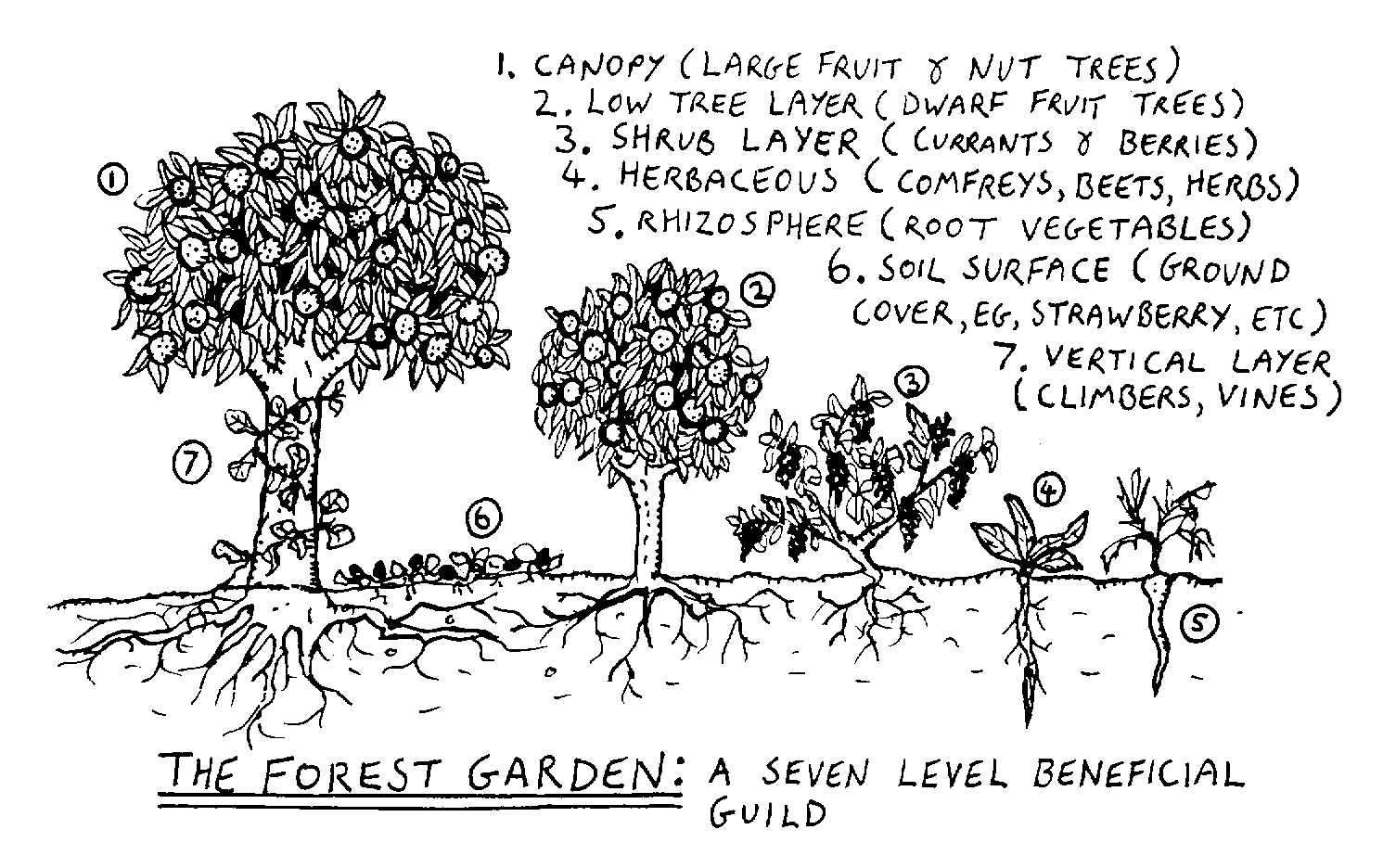
Food forest diagram
From Wikipedia, the free encyclopedia
File:Forgard2-003.gif


Robert Hart (horticulturist)

From Wikipedia, the free encyclopedia

Robert Hart pictured in his forest garden, July 1997

Robert Hart's forest garden in Shropshire, England
Robert A de J Hart (1 April 1913 – 7 March 2000) was the pioneer of forest gardening in the UK.
Robert A de J Hart began his forest garden project at Wenlock Edge in Shropshire on the Welsh borders in the early 1960s with the intention of providing a healthy and therapeutic environment for himself and his brother Lacon, who was born with severe learning disabilities. Although starting as a relatively conventional smallholder, Robert A de J Hart soon discovered that maintaining large annual vegetable beds, rearing livestock and taking care of anorchard were tasks beyond his strength. However, he also observed that a small bed of perennial vegetables and herbs he had planted was looking after itself with little or no intervention. Furthermore, these plants provided interesting and unusual additions to the diet, and seemed to promote health and vigour in both body and mind.
Noting the maxim of Hippocrates to “make food your medicine and medicine your food”, Robert adopted a vegan, 90% raw food diet. He also began to examine the interactions and relationships that take place between plants in natural systems, particularly in woodland, the climax eco-system of a cool temperate region such as the British Isles. This led him to evolve the concept of the ‘Forest Garden’: Based on the observation that the natural forest can be divided into distinct layers or ‘storeys’, he developed an existing small orchard of apples and pears into an edible landscape consisting of seven dimensions;
  1. A ‘canopy’ layer consisting of the original mature fruit trees.
  2. A ‘low-tree’ layer of smaller nut and fruit trees on dwarfing root stocks.
  3. A ‘shrub layer’ of fruit bushes such as currants and berries.
  4. A ‘herbaceous layer’ of perennial vegetables and herbs.
  5. A ‘ground cover’ layer of edible plants that spread horizontally.
  6. A ‘rhizosphere’ or ‘underground’ dimension of plants grown for their roots and tubers.
  7. A vertical ‘layer’ of vines and climbers.
Hart's vision of the spread of the forest garden is summarised in the following quote;
Obviously, few of us are in a position to restore the forests.. But tens of millions of us have gardens, or access to open spaces such as industrial wastelands, where trees can be planted. and if full advantage can be taken of the potentialities that are available even in heavily built up areas, new ‘city forests’ can arise...

Friday, March 11, 2011

My food forest part 1 with pictures

So it's March and there is snow on the ground off and on. Today was unusually warm, so me and two of my kiddos started prepping for our second faze of our food forest.


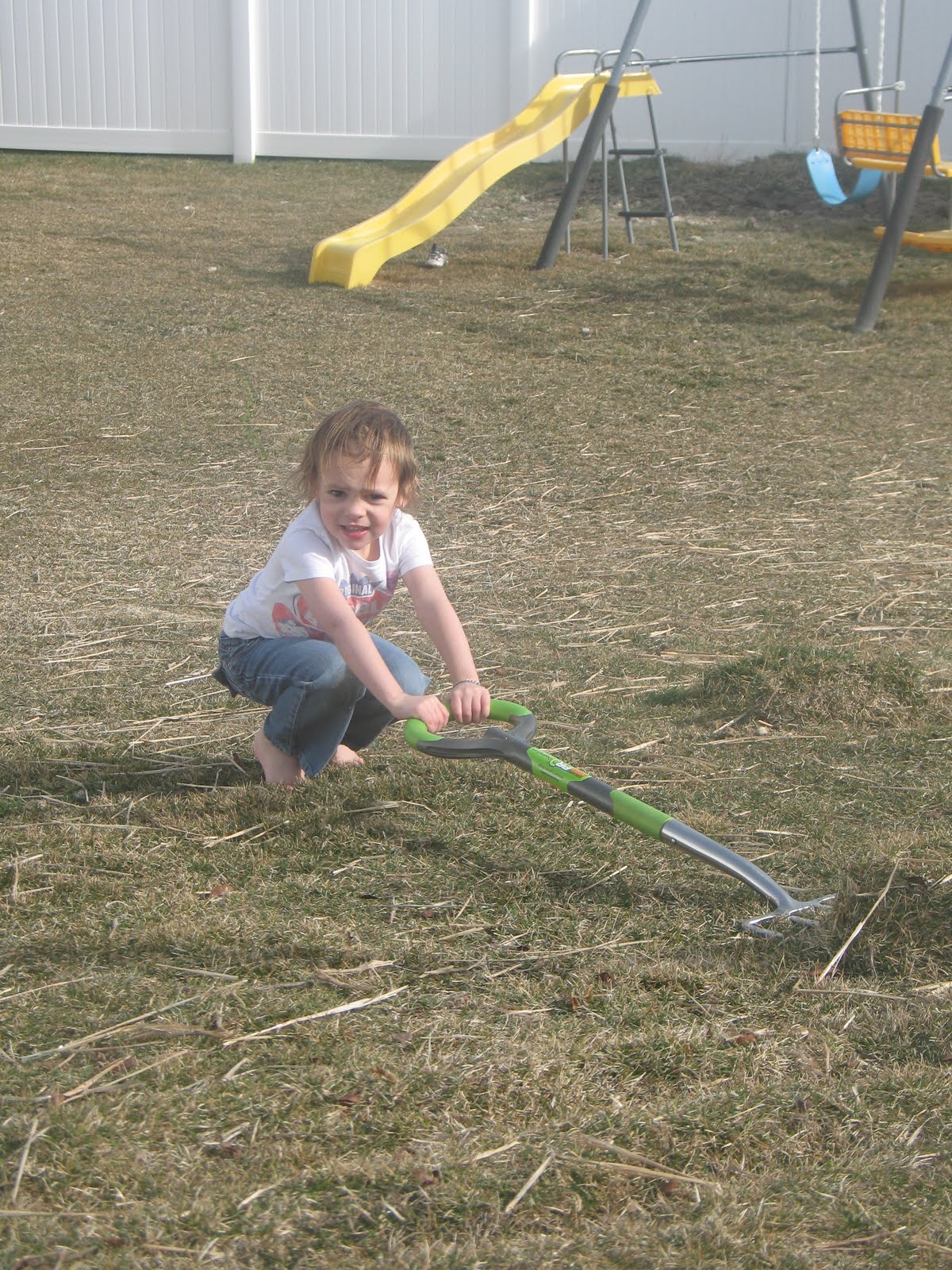
What took me a several weeks to get done last summer/fall I've already done today. I used my most favorite garden tool, my handy digging fork and loosened a 10 x 15 area. I have oh so much more to do but it felt so good to be out, working hard in my dirt.


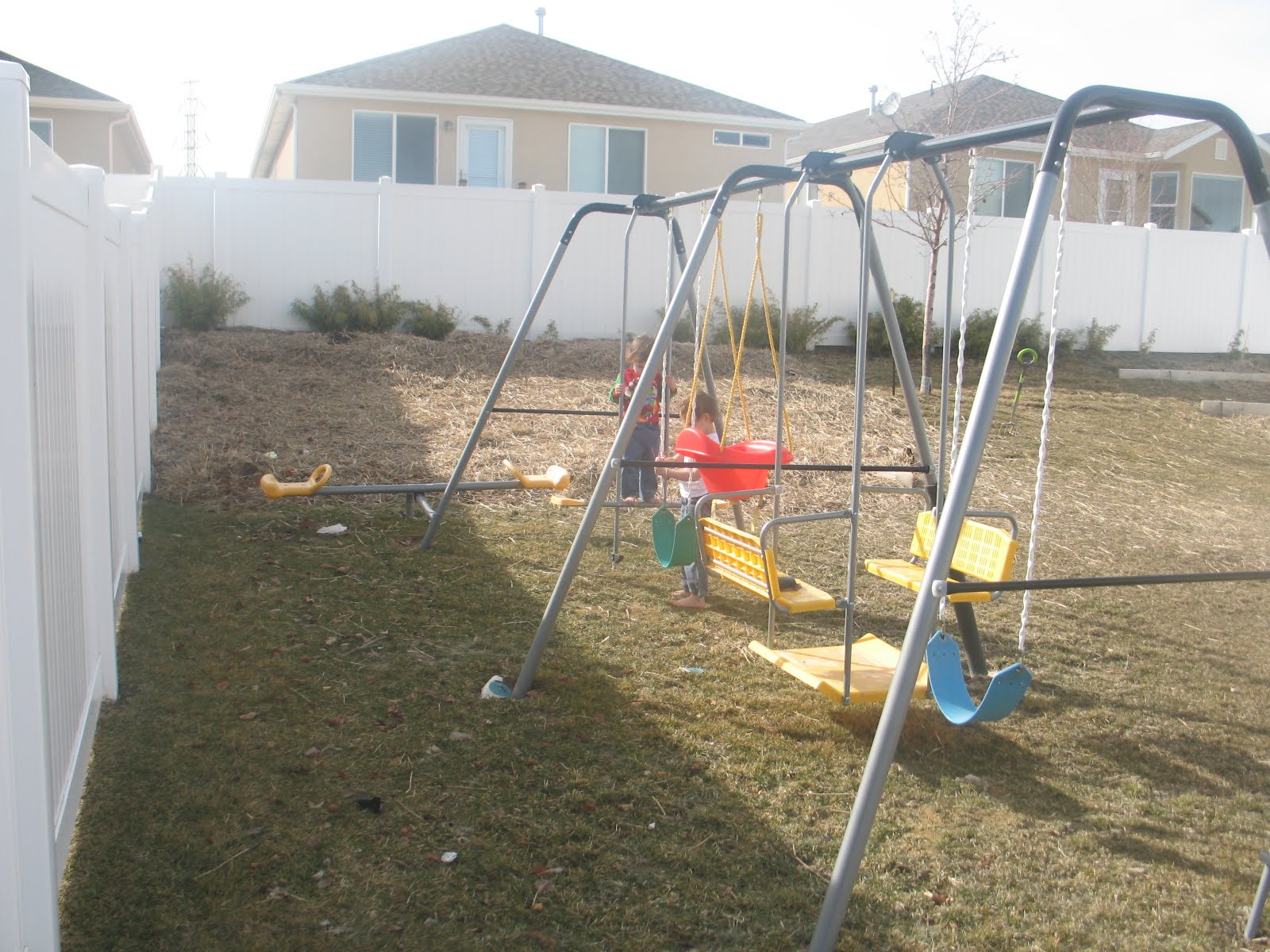
In a week I need all my loosening done. I have a 12 yard screened topsoil, mulch mix coming. I will do my sheet mulching and prep most of the beds with a cover crop. (In between the snow/melting) Here is a quick walk around at my current yard. From front yard, left side yard, and my back yard looking towards my prepped food forest from last fall, and lastly in the corner my current annual garden beds with grapes in the back and two espelir apple trees against my house.


In the next month I will have trees and shrubs to plant. I'm thinking a black locust, peach, cherry tree base to my food forest. We love both peaches and cherries and the black locust is a nitrogen fixing tree that's pods can be ground for forage for animals.

In May I will plant all those little plants growing in my basement. Voila my food forest part 1 will be well on it's way.

Thursday, March 10, 2011

Dirt! The Movie.


Living, breathing dirt. What you think of as precious or wealth may change. One hour and twenty minutes of valuable information.

Wednesday, March 9, 2011

My basement worm farm

It was several months back that I went to my local walmart and picked up two opaque plastic 55 gallon tubs. I proceeded to drill dozens of holes in the top, and sides of one of the tubs. Which I then filled with shredded paper, cardboard, paper egg cartons, well rotted vegetables and a small bit of garden soil. All was moist. In the other tub I placed two empty 10# cans for spacers and placed the other hole ridden tub on top of it. A week or so later my red worms came. I placed them inside the tub full of trash and boom there is my worm farm.

Suffice it to say my husband was extremely grossed out with my new pets, just in the unfinished part of his domain. Which of course is the entire basement which includes the family room minus a tiny spot he has generously let our three kids have some toys in after much persuasion on my part.

Here is our worm farm conversation; [so funny I can say that.]
"Mom's getting us pets Dad!" My little 4 and 2 year old say My 7 year old is silent. She knows it's not in our best interest to share that information with him. 
"Really!!!" He says eyeing me with a 'what are they talking about smile, we are not pet people.' 
"Worms. We feed them our rotten food Dad." the words burst from my 4 year though she herself is wearing a grossed out face. My 2 year old and 7 year are smiling happily. They all love anything I say is good for us and our garden. ;) 
"No way we are not having worms." He replies to the kids. In a very firm tone. Their faces take a stricken look. "Oh that's disgusting Bran, it's going to smell like rotten food. You can't have them." He informs me then, in an exasperated and slightly offended tone. 
The conversation goes on, only horribly wrong for me. He's very admit that we will NEVER have any worms INSIDE our house.

It's barley January when we have this conversation. I never thought to ask permission. It's just worms. The snows are pretty heavy at this point and well, no, the worms can't go outside. So I just drop the subject. I had already bought the tubs and prepared them. I couldn't quite bring myself to tell him the whole truth, the worms were on their way already. I'd just have to ask for forgiveness when and if - he finds out. So as the weeks past we got our package of worms and I plopped them in the box. I tell my children that Dad doesn't like the worms so don't talk to him about them.

About a month later my husband informs me every time he opens the unfinished basement door that my 4 year old tells him we should "feed our worms" or "the worms don't like light". Even my 2 year old is in on ratting me out she tells dad about "mommy's babies" or "wurm fahm" yep that's her way of telling him we've got a worm farm just 15 feet from his television.

But nope it doesn't smell. And since HE doesn't actually have to feed them he doesn't mind. It's not work for him and he could nearly forget because in the unfinished basement most of our tubs look the same. He still thinks it is gross, and now my 7 year old does too! But my 4 and 2 year old pile their uneaten green waste like soy bean pods (beans already eaten) and lettuce leaves proudly into the tubs. We're "feeding mommies babies" after all.


Hope you enjoyed that little tidbit. Life is a little too funny not to share some days.


Our composting IS going awesome. It's been three months now. The worms are healthy, I'm not sure you can kill them really. They are just too easy. Our kitchen waste is so much less; with the greens going into the worm farm, recycling [in which I myself have to drive to a recycling center] our trash has dramatically reduced by 60% or more.

Three fold soil composting;

  1. Worm farm [rotted green waste from our garden/fridge, pet waste]
  2. Compost tumbler [waste that cannot be used in the worm farm and the pets won't eat]
  3. Pet's eating our fresh green waste [unfinished vegetables and such, their waste and bedding going into the worm farm]